Exercise Increased Caution
Updated Sun, 19 Jul 2026
Full advisory →India · Safety report last updated
As of July 2026, Kasol scores 69/100 on the IsMyTripSafe composite safety index — verdict: yes — generally safe. Mostly yes for street crime — Kasol is friendly and low-crime — but right now (peak monsoon, with a red weather alert on Kullu district) landslides, flash floods and risky solo treks are the real dangers, not people. The main risks for visitors are tourist-targeted scams. The U.S. State Department rates it Level 2 (Exercise Increased Caution).
01 · Official Guidance
Exercise Increased Caution
Updated Sun, 19 Jul 2026
Full advisory →Advises against all travel to parts of the country
“Your travel insurance could be invalidated if you travel against advice from the Foreign, Commonwealth & Development Office (FCDO). Areas where FCDO advises against travel India-Pakistan border area FCDO advises against all travel within 10km of the India-Pakistan border.”
Updated 2026-07-09T13:54:18Z
Full advisory →Exercise a high degree of caution (with regional advisories)
“Canada's official risk level for India: exercise a high degree of caution (with regional advisories).”
Updated 2026-07-13T11:19:39.2642671-04:00
Full advisory →02 · Evidence Signals
Homicide rate
Violent mugging of tourists is rare in Kasol itself; the valley's dangers are terrain, rivers and drug-scene entanglement rather than armed street crime.
Petty theft from unattended bags, camps and hostel dorms happens occasionally in the market and at campsites; keep valuables locked and on you during bus transfers.
03 · Environment
04 · Institutions
05 · Field Research
Mostly yes for street crime — Kasol is friendly and low-crime — but right now (peak monsoon, with a red weather alert on Kullu district) landslides, flash floods and risky solo treks are the real dangers, not people.
India's national indicators (moderate homicide, decent rule of law) matter less here than Kasol's own profile: a tiny backpacker village where violent crime against visitors is rare but the surrounding Parvati Valley has a decades-long record of trekkers disappearing, a heavy drug scene with aggressive police enforcement, and severe monsoon hazards. In July 2026 the approach road (Bhuntar–Manikaran) is landslide-prone and under vehicle restrictions, and IMD has a red alert on Kullu district for July 20–21. There is no hospital mapped within 15 km — serious injuries mean an hour-plus evacuation to Kullu/Bhuntar.
Recent developments
Common scams
Full briefing
Bottom line: Kasol won't hurt you — but its river, its trails, its road and its drug scene can. For ordinary street crime this is one of the more relaxed places you can visit in India: a tiny backpacker village where violent crime against tourists is genuinely rare, solo travellers (including women, with normal precautions) report feeling comfortable, and the national-level indicators — a homicide rate half the world average, no terrorism footprint anywhere near Himachal — barely apply to daily life here. The things that actually put visitors in danger in the Parvati Valley are almost entirely environmental and self-inflicted, and right now, in peak monsoon, they are at their annual maximum.
The timing matters. As of this weekend the India Meteorological Department has a red alert on Kullu district (July 20–21) after cloudbursts in the Nirmand and Garsa Valley areas triggered flash floods, washed out a bridge and blocked roads (The News Himachal, NewsX). Kasol's single access road, Bhuntar–Manikaran, took a major landslide in February and has been under district-ordered heavy-vehicle restrictions since April because of continuing slide risk (TravelCoffee monsoon guide). If you travel now: do the last stretch from Bhuntar in daylight, build slack days into your plan, and treat the Parvati River with real respect — in May 2025 two tourists were swept away near Kasol by a surge from a dam release, with no rain falling where they stood.
The valley's darker reputation is not folklore. Police data reported this year shows about 1,078 people went missing in the Parvati Valley between 2003 and 2023 and only around half were ever traced, a story covered in depth by The Tribune, ThePrint and the South China Morning Post. Most cases trace to two things that are fully within your control: trekking alone off marked routes, and the charas trade. On the second point, be under no illusion — Himachal Police run continuous anti-drug operations here, thousands of NDPS cases have been registered in the Kasol area in recent years, and a case now before the Himachal High Court (a US tourist who alleges police demanded cash and planted charas on him near Bhuntar in February 2026) shows that even *proximity* to the drug scene can wreck your trip. The only winning move is total abstention: don't buy, don't hold, don't join the "special" parties, and decline food or smokes from strangers, which travellers have reported being laced.
How to stay safe, condensed: trek only with a registered guide and tell someone your route and return time; keep off the riverbanks and out of riverside camps this month; do all road travel in daylight; stay away from drugs entirely; and remember there is no proper hospital near the village — anything serious means a long evacuation to Bhuntar or Kullu, so carry a first-aid kit, travel insurance that covers trekking, and dengue-season mosquito repellent. Do that, and Kasol in a dry weather window is a rewarding, largely safe stop; ignore it, and you're gambling against the exact hazards that fill the valley's missing-persons files.
Sources: The News Himachal · NewsX · The Tribune · ThePrint — vanishing trekkers · ThePrint — Kasol's 'Mini Israel' · SCMP · TravelCoffee — Kasol in monsoon · TravelCoffee — solo travellers · HC case report on US tourist detention
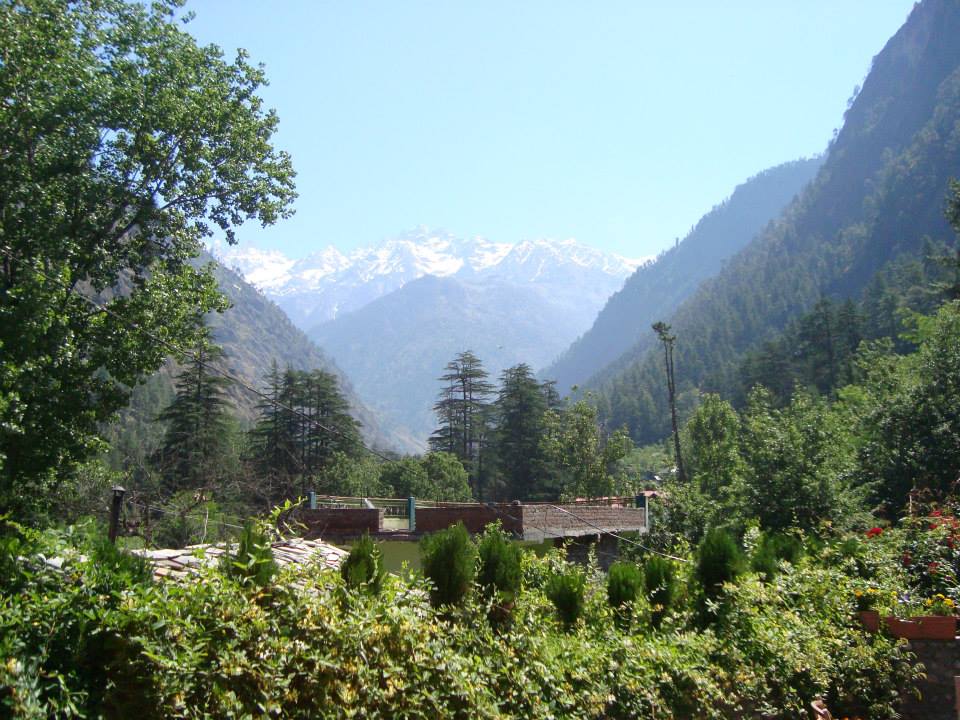
06 · Neighbourhoods
Our field research rated 8 Kasol districts for visitors: 3 safer, 3 needing caution and 2 best avoided. See them plotted on the Kasol safety map.
Kheerganga trek routeavoidAvoid during active monsoon: flash-flood-prone, slippery, and the route where several trekkers have vanished or died; only with a registered guide in dry windows.
Parvati riverbank camps (Katagla–Choj stretch)avoidSudden water surges from cloudbursts and dam releases have swept tourists away; don't camp or linger at the water's edge in July.
ChalalcautionParty/rave village across the footbridge; pleasant by day, but the forest trail back is unlit and isolated after dark, and the drug scene concentrates here.
ToshcautionScenic party village at the valley head; fine in daylight, but its steep access road slips in monsoon and medical help is very far.
MalanacautionDay-trips only — overnight stays by outsiders are barred, strict touch taboos carry fines, and the village is the centre of the charas trade.
Kasol main market (Old Kasol)saferThe busy backpacker core — cafés, hostels, police presence; fine day and evening, just avoid the drug scene.
New KasolsaferThe quieter hotel side across the nallah; safe, but skip riverside rooms/camps during heavy monsoon rain.
ManikaransaferBusy Sikh-Hindu pilgrimage town 4 km up-valley with a constant crowd; the risk is the landslide-prone access road, not the town.
07 · After Dark
Violent mugging of tourists is rare in Kasol itself; the valley's dangers are terrain, rivers and drug-scene entanglement rather than armed street crime.
After dark, be most careful around Kheerganga trek route, Parvati riverbank camps (Katagla–Choj stretch), Chalal, Tosh. Stick to busy, well-lit streets and licensed taxis or ride-hail late at night.
08 · Trip Profiles
Who's travelling changes which risks matter. These re-weight Kasol's category data for common trip types — same data, different emphasis. Run your own profile from the interactive checker.
09 · Questions
Mostly yes for street crime — Kasol is friendly and low-crime — but right now (peak monsoon, with a red weather alert on Kullu district) landslides, flash floods and risky solo treks are the real dangers, not people. India's national indicators (moderate homicide, decent rule of law) matter less here than Kasol's own profile: a tiny backpacker village where violent crime against visitors is rare but the surrounding Parvati Valley has a decades-long record of trekkers disappearing, a heavy drug scene with aggressive police enforcement, and severe monsoon hazards. In July 2026 the approach road (Bhuntar–Manikaran) is landslide-prone and under vehicle restrictions, and IMD has a red alert on Kullu district for July 20–21. There is no hospital mapped within 15 km — serious injuries mean an hour-plus evacuation to Kullu/Bhuntar. (Assessed 20 July 2026.)
Field research flags Kheerganga trek route, Parvati riverbank camps (Katagla–Choj stretch) as best avoided. See the district-by-district safety map.
Kasol ranks #1 of 4 India destinations we've assessed, scoring 69/100. See the India safety overview for the full list.
The score blends 13+ public data sources — government advisories, UNODC/World Bank crime statistics, WHO health data, live air quality and disaster alerts — with AI field research over current local reporting. The databases carry 75% of the weight, field research 25%. Full methodology.
Browse the India safety overview or all destinations. Raw data: kasol.json (CC BY 4.0).